
A $30,000 hedge that dies in fourteen months. I’ve watched it happen on three different streets near the Granada golf course, always for the same reason: the plant was chosen from a catalog photo taken in a completely different climate.
Coral Gables is not Miami Beach, and it is not Naples. The coral rock under your lawn, the salt in the air after a southeast breeze, the ordinances that protect certain trees, and the rainy season that drowns roots in June and starves them in April all push back against whatever you saw on a design blog last weekend. Agree with that reality and your yard thrives. Ignore it and you’re paying a crew to replant every couple of years.
What follows is the working logic behind a yard that holds up in this city. You’ll get the plant categories that survive here, the zones worth designing separately, the permitting quirks that trip people up, and a checklist you can hand to any designer before you sign anything.
Why the Same Plants Fail Here That Work in Broward
The National Weather Service keeps the Miami area in a zone where a single winter night can drop close to freezing and then swing back into the eighties by afternoon. That range is what kills the plants. A ficus that shrugs off November in Davie can lose everything above the soil line after one cold snap in a Coral Gables courtyard that traps cold air under oak canopy.
So the plants that actually hold up here are the boring ones. Sea grape, gumbo limbo, coontie, and native firebush don’t get photographed for Pinterest much, and I’d plant any of them over a trendy import ten times out of ten. They’ve been surviving hurricanes, salt spray, and drought in this exact soil for centuries. Your yard is a small hypothesis test, and they already passed it.
Salt exposure matters more than most homeowners expect. If you’re within a few blocks of Biscayne Bay, anything on the windward side of the house gets a brine bath every time the wind turns. That limits what you can put in the front bed, not just what you can put on the water.
Design in Zones, Not in One Sweep
The mistake I see most: treating the entire property as a single canvas. Coral Gables lots usually have four different microclimates, and each one wants a different plant list.
- Foundation beds under eaves: dry, shaded, and baked by reflected heat. Low water users only.
- Open lawn to the south and west: full sun, high evaporation, needs irrigation on a real schedule.
- Courtyard and side yards: trapped air, poor drainage in August. These flood first.
- Pool deck and terrace edges: chlorine splash, foot traffic, and reflected glare. Tough, low ground covers.
Walk your property at 2 p.m. in July and at 8 a.m. in January. Note where the shade actually falls and where water actually pools. You’ll design better with that hour of observation than with any magazine spread.
The Coral Rock Problem Nobody Warns You About
Dig a foot down in most of this city and you hit oolitic limestone. It’s beautiful when exposed and brutal when you’re trying to plant a seven-gallon tree. You need a jackhammer, a raised bed, or a species whose roots don’t care about a shallow profile.
Drainage is the flip side. Coral rock sheds water instead of absorbing it, which means a low corner of your yard turns into a pond after every summer storm. If you see standing water for more than a day, that spot isn’t a planting bed. It’s a water feature waiting to happen, or a spot for a raised planter with its own drainage.
What the City Actually Requires
Coral Gables has rules that catch transplants off guard. Certain mature trees are protected, and removing one without approval can cost you real money. Front-yard setbacks limit how close hardscape can go to the street. And the Mediterranean architecture that gives the city its look tends to push landscape plans toward specific canopy shapes, which is a design constraint, not a suggestion.
Before you buy a single plant, pull your property survey and check what the code says about tree removal and impervious surface coverage. It saves you a conversation with a code officer later. Homeowners who plan for this upfront spend their budget on plants instead of permits.
What It Costs to Keep a Yard Alive Here
Summer in South Florida does not negotiate. According to baseline climate data from the National Weather Service, the region’s wet season delivers the majority of its annual rainfall between roughly May and October, and a Coral Gables irrigation system that runs on a fixed timer will overwater in July and underwater in March. Climate aware controllers pay for themselves in one season.
Then there’s the maintenance math. A yard with a native-dominant plant palette typically needs less pruning, less fertilizer, and less replacement than one built around tropical ornamentals. That’s not a moral argument about native plants. It’s a budget argument: fewer plant deaths means fewer purchases.
Lawn care in this climate is its own recurring bill. St. Augustine grass wants water, iron, and a fungicide plan. If you’re not committed to that routine, replace the lawn with ground cover and stop paying for it.
What Separates a Great Yard From an Okay One
Here’s the framework I use. I call it the Four Questions Filter, and it’s how I’d evaluate any landscape plan before committing:
- Where does water go when it rains hard for an hour? If the plan ignores drainage, cross it off.
- What does this look like in February, not just June? Year-round structure beats peak-season color.
- Who maintains it, and do they know these plants? A plan your crew can’t execute is decoration.
- Does it match the architecture and the block? A Coral Gables yard should feel like Coral Gables.
Homeowners hire Coral Gables landscaping experts for exactly this reason: the plant knowledge is local, the permitting is familiar, and the design is built for this climate instead of adapted from somewhere else. You’re not paying for pretty pictures. You’re paying for a yard that’s still standing in five years.
If you want to go deeper on plant selection, the University of Florida’s agricultural research programs publish some of the most reliable guidance on South Florida species, salt tolerance, and soil conditions. It’s dry reading and it’s the best free resource you’ll find. Worth an afternoon.
Small Upgrades That Pay You Back
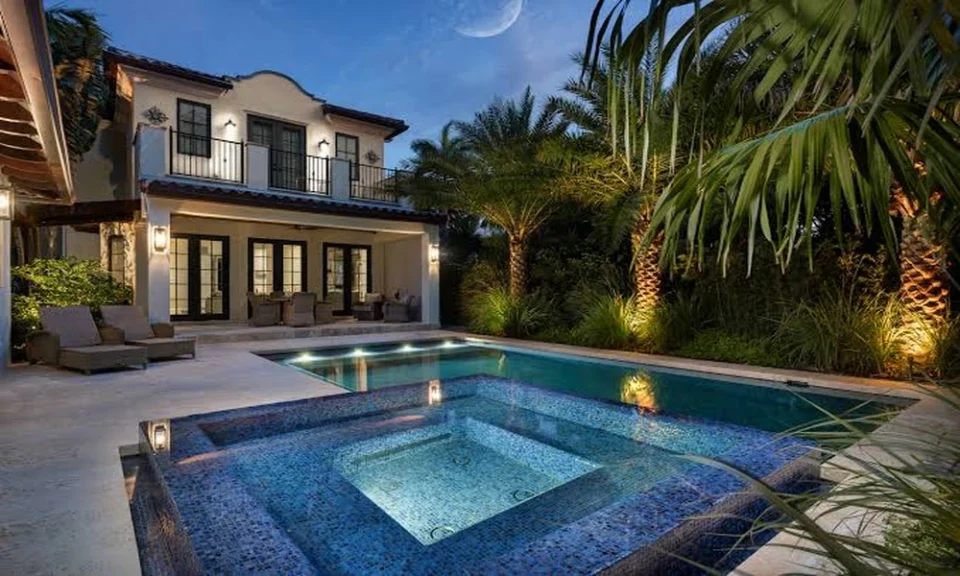
Lighting transforms a yard at night more than any plant will during the day. Uplighting a mature oak costs a fraction of what replanting a bed does, and it makes the whole property read as designed. Similarly, a well-placed water feature masks street noise and gives the eye somewhere to land at the end of a sightline.
These aren’t accessories. They’re the difference between a yard that looks complete and one that looks unfinished. Homeowners tend to underinvest in lighting and overinvest in plants, and it’s usually backwards.
Your Checklist Before You Hire Anyone
Ask every designer you interview:
- Show me three properties you planted at least three years ago, still on your maintenance plan.
- What’s your plan if the coral rock makes planting impossible in this bed?
- Which plants in your design are salt tolerant, and which are not?
- Who pulls irrigation permits, you or me?
- What does the design look like in month three and month thirty?
Any designer who can’t answer those without blinking isn’t ready for your yard.
The Bottom Line
Coral Gables rewards yards that work with the climate instead of against it. Choose plants that already live here, design in zones instead of one sweep, deal with the rock and drainage honestly, and check the code before you buy anything. Do those four things and your landscape stops being a recurring expense and starts being the thing neighbors slow down to look at.
Start with the two-hour walk I recommended. South at noon, north at eight. What you notice in those two hours will tell you more than any plant list I could hand you.
