
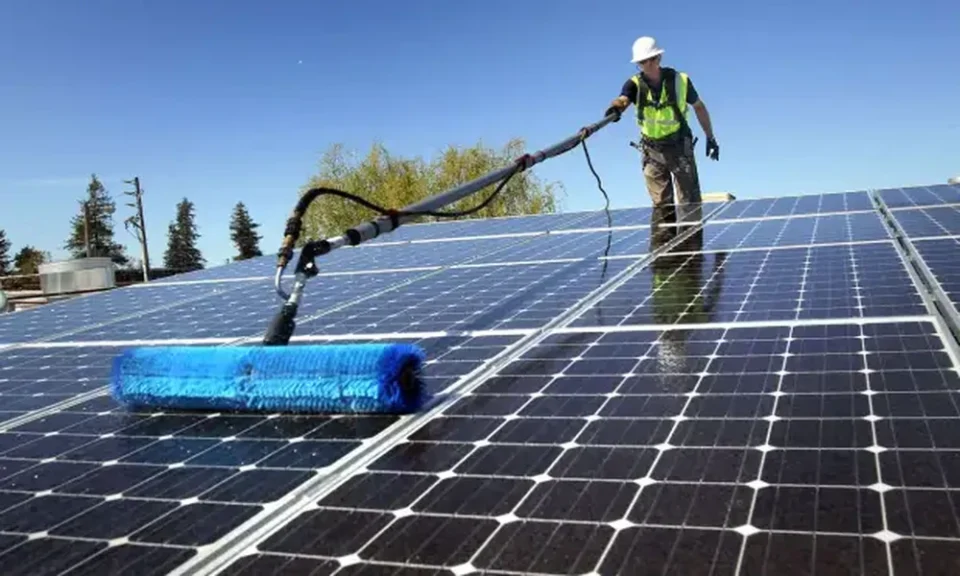
Your rooftop array doesn’t die a dramatic death. It just gets quietly dimmer. Most Hawaii homeowners notice their production numbers slipping a little each month and assume the panels are aging, when the real culprit is a film of salt, red dirt, and bird mess that nobody washed off.
I’ve watched this play out on roofs from Kailua to Kihei. The panels are fine. The glass is filthy. And the fix is a whole lot cheaper than a panel replacement. The solar panel care experts in Hawaii deal with this salt-and-dust combination every single week, which is exactly why the local approach to cleaning looks nothing like what a mainland guide tells you.
Here’s what you’ll get in the next few minutes: why island conditions punish panels harder than most climates, how to spot the drop before your bill tells you, and a cleaning routine you can actually keep up with. If you own the array, you own the maintenance. Nobody else is going to notice the grime for you.
Salt Air Is the Silent Production Killer
Hawaii’s trade winds feel great on your face. They’re brutal on your photovoltaic glass. Ocean spray rides those winds inland and lands as a fine salt film, then the sun bakes it into a hazy coat that scatters light instead of letting it through. You won’t see it from the ground. You’ll see it when your inverter app starts telling a story you don’t like.
The salt doesn’t just sit there. It bonds, especially along the lower edge of each panel where moisture collects and dries. Left alone through a few rain cycles, that film becomes a stubborn mineral layer. I’d argue it’s the single biggest reason Hawaii arrays underperform their rated output, and it has nothing to do with the panels themselves.
This is where a lot of folks go wrong: they wait for the rain to “wash it off.” Rain rinses dust. It does not dissolve salt crust. According to the U.S. Department of Energy, regular cleaning and maintenance help photovoltaic systems run closer to their rated efficiency, and the department is fairly clear that dirt accumulation is a real performance drag rather than a cosmetic issue. Take that as permission to stop waiting for the weather.
Red Dirt, Vog, and Bird Droppings: The Local Grime Mix
Salt is only one ingredient in Hawaii’s dirty-panel recipe. You’ve also got volcanic dust that settles after dry, windy stretches, plus vog that leaves a faint sulfur haze on glass. On the leeward sides of the islands, that dust load is heavier and the rain is lighter, which is the worst possible combination for a solar array.
Then there’s wildlife. Birds love a panel for the warmth and the vantage point, and their droppings are genuinely nasty on glass. A single dropping can block more surface area than you’d guess, and because it shades one cell in a string, the loss can be larger than the spot suggests. Think of it like a kink in a garden hose: the whole line slows down, not just the pinched part.
Rooftop temperatures make it worse. Panels in full island sun get hot, and heat causes the grime to cure faster. So the same dust that would blow off a mainland roof in a week is practically fused to yours by the end of the month. That’s the part people underestimate.
How to Tell Your Panels Are Due for a Clean
You don’t need special equipment to catch this early. You need to actually look, and you need one number.
- Compare this month to the same month last year. Seasonal dips are normal. A steady slide that doesn’t recover is grime.
- Look at the glass from an angle. Stand where the sun hits the panels at a slant. A dull, hazy sheen means a film you should deal with.
- Check the edges. Grime builds first along the frame and the bottom edge, so that’s your early warning zone.
- Watch for spotting after rain. Water that dries into visible rings is leaving minerals behind.
If two or more of those boxes get checked, stop guessing and schedule the wash. My take: a dirty array is the cheapest problem you’ll ever fix, so don’t let it grow into a diagnostic mystery. The U.S. Energy Information Administration tracks how residential solar production varies with real-world conditions over time, and the data consistently shows output is sensitive to things besides the equipment itself.
A Cleaning Routine You’ll Actually Keep
Here’s a straightforward approach, in order, that works for most island homes.
- Rinse first, never scrub dry. Dry brushing drags grit across the glass and can scuff it. A gentle pre-rinse floats the loose stuff away.
- Use plain water and a soft brush. No abrasive pads, no dish soap that leaves a residue, no pressure washer aimed at the frame seals.
- Work top down, in the cool part of the day. Early morning beats midday, when hot glass and cold water can stress the panels.
- Clean the array on a schedule, not on a whim. For most Hawaii roofs, every few months keeps the film from setting. Dustier leeward areas and homes near the water may need it more often.
- Check the mounting and wiring while you’re up there. Cleaning is a good excuse to look for loose clamps or worn cable, which is a maintenance issue you’ll want early.
If your roof is steep, high, or packed with skylights, don’t get heroic about it. Rooftop work is where DIY cleaning goes wrong. The Occupational Safety and Health Administration treats residential roof work as a genuine fall hazard for a reason, and a professional crew is cheaper than a hospital visit plus a damaged array.
A Simple Way to Think About Panel Health
I use a mental model I call the Clean, Cool, Connected rule. Three things keep an array productive, and they’re easy to remember in that order.
Clean means the glass is letting light through, which is what you’re washing for. Cool means the panels aren’t baking in trapped heat or blocked airflow, so keep vegetation trimmed back and avoid stacking gear against the mounting. Connected means the wiring, clamps, and inverter are all doing their job, and a thermal scan is the fastest way to spot a hot spot or a loose connection before it becomes a repair.
Most homeowners obsess over the panels themselves and ignore all three surrounding factors. I’d flip that. The panels are the durable part. The conditions around them are what decide whether you get your money’s worth.
When to Call in the Pros
Cleaning a ground-mounted array on a flat lot is a weekend project. Cleaning a steep island roof with salt-cured glass and a bird problem is not. Call someone when your roof pitch is aggressive, when the array sits above a two-story drop, when you’re seeing stubborn spotting that doesn’t lift with water, or when your production numbers keep sliding even after a wash.
The other trigger is a system you don’t fully understand. If you bought the house with panels already installed and you’ve never seen a maintenance record, a professional inspection is the smartest first move. It tells you what you’re working with, and it might explain a bill spike you blamed on the utility.
The National Renewable Energy Laboratory studies how photovoltaic systems perform across real operating conditions, including soiling, and the takeaway for owners is consistent: dirt is a measurable drag, and addressing it is part of normal upkeep rather than a repair.
Keep the Array Working, Not Just Installed
The panels on your roof were a serious investment, and the sun here is the best resource on the islands. That same sun, combined with salt wind and volcanic dust, is also what makes your array need attention more often than a friend on the mainland’s. None of this is complicated. Look at the glass, watch the production numbers, clean on a schedule, and get help when the roof is out of your comfort zone.
So here’s the question worth asking this weekend: when did you last actually look at your panels, not just the bill? If you can’t remember, that’s your answer. Get them clean, keep them productive, and let the sun do what you paid it to do.
