
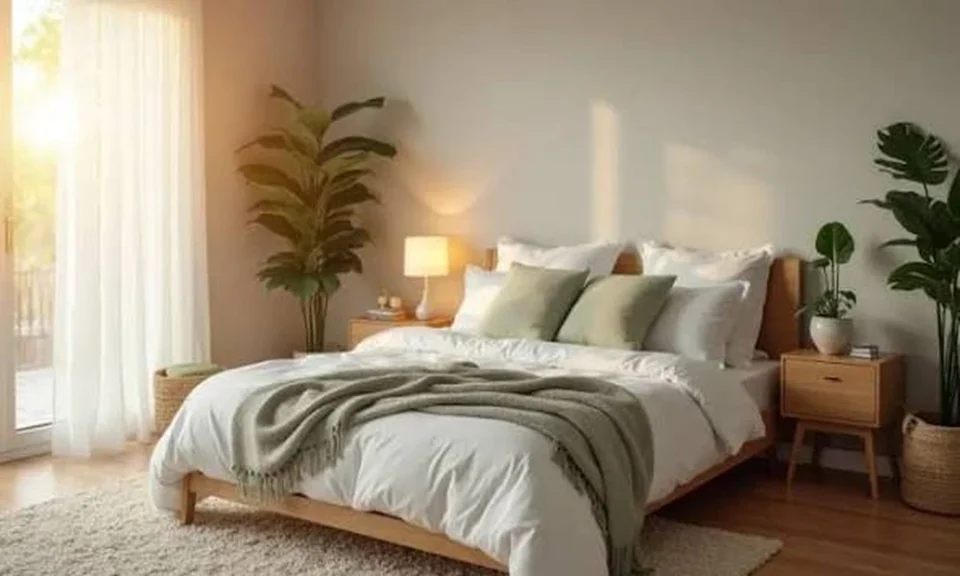
57% of American adults say they’d feel better if they simply got more sleep. That’s not a fringe statistic. That’s the majority of the country dragging through their days on a sleep deficit that most of them never stop to seriously address.
The problem isn’t always stress or screen time. A lot of the time, it’s the physical setup of the room where you spend roughly a third of your life. Your mattress, your air quality, your thermal environment, and the choices you made (or didn’t make) when furnishing your bedroom all add up to either deeply restorative sleep or a nightly battle with your own bed.
Here’s how to audit that setup and fix what’s actually broken.
Why Your Mattress Is the Starting Point, Not the Afterthought
Most people choose their mattress the way they choose a rental car. They pick whatever’s available, settle for what looks acceptable in the showroom, and move on. Then they wonder why they wake up stiff or wake up at all.
Research published in 2024 through the National Institutes of Health found that 93% of people say their mattress plays a pivotal role in achieving high-quality sleep, yet the overwhelming majority of sleepers have never had a guided conversation about what type of surface actually suits their body, sleep position, or thermal preferences. That gap between what people believe and what they actually do about it is where most bad sleep hides.
The mattress decision is where you spend the most money and reap the most long-term return. Get that right first, and everything else is refinement.
The Sleep Surface Triangle
Here’s a framework worth keeping in mind before you set foot in any showroom: every mattress decision involves three intersecting factors, and neglecting any one of them will cost you sleep.
- Material composition – foam, latex, natural fibers, coil systems. Each one handles pressure, temperature, and movement differently.
- Thermal behavior – how well the surface dissipates body heat through the night, which directly affects your ability to stay in deep sleep.
- Chemical environment – what the mattress off-gasses into your bedroom air while you sleep, especially relevant for people with sensitivities or who sleep in smaller, less-ventilated rooms.
Most mattress marketing talks exclusively about the first point. The second and third are where your sleep either holds up or quietly falls apart.
What “Natural” Actually Means on a Mattress Label
The word “natural” gets thrown around in mattress marketing with roughly the same rigor as “artisanal” on a restaurant menu. So it’s worth understanding the specific certifications that actually mean something.
OEKO-TEX Standard 100 is the most meaningful benchmark in this space. A mattress carrying this rating has been tested for harmful substances across every component, not just the fabric cover, but the foam cores, adhesives, and fire retardants too. It means what you’re breathing in while you sleep has been verified to be free of formaldehyde, chlorinated compounds, and the other chemical byproducts that synthetic mattresses can emit into a closed room overnight.
Silica-based fire retardants (used in place of chemical additives) are another marker worth looking for. They perform the same protective function with none of the VOC exposure.
If a mattress doesn’t tell you specifically how it handles these two things, that’s your answer.
The First-Time Luxury Mattress Buyer: What Actually Happens in the Showroom
Picture this. You’ve decided you’re done with the mattress you’ve had for nine years. You walk into a proper luxury sleep retailer, not a big-box store, but a specialty showroom where the salespeople actually know their product. You lie down on the first mattress. It feels incredible. Then you lie down on the second, and it also feels incredible. Then you’re paralyzed, because everything feels good and you have no framework for choosing.
Here’s what experienced buyers do differently. They come in knowing their sleep position (side, back, or stomach), their primary complaint (pressure, heat, partner movement, or just restlessness), and one or two brand names they’ve already researched. That prior research acts as an anchor for the conversation. Shoppers who visit stores like Magnifex mattresses in Santa Fe, NM, already knowing that a brand like Magniflex sources certified natural materials and carries Italian craftsmanship pedigree walk out with more confidence, because they’ve done the work that makes comparison possible.
Walk in blind, and you’ll buy whatever the last thing you tested was.
Controlling Your Bedroom Environment Around the Mattress
Even the best mattress works against you in a poorly managed room. There are three environmental variables that research keeps returning to as meaningful: temperature, air quality, and light.
Temperature is the most actionable. Your core body temperature naturally drops as you fall asleep, and a room that stays too warm interferes with that process. Most sleep researchers point to a range between 65 and 68 degrees Fahrenheit as a useful starting zone, though individual preference varies. The bigger issue is consistency. A room that starts cool and climbs to warm by 3 a.m. fragments sleep even when you don’t fully wake from it.
Air quality is the one most people miss entirely. A 2024 cross-sectional study published by the journal Building and Environment tracked 50 bedrooms and found that according to Gallup’s April 2024 survey, 57% of U.S. adults believe they’d feel better with more sleep, yet bedroom carbon dioxide levels and particulate matter were measurably linked to reduced sleep efficiency and less time in deep and REM stages. In plain language: a room with poor ventilation is actively stealing your deep sleep, even if you don’t realize it. Opening a window helps CO2 but can raise particulate matter. A quality air purifier with a HEPA filter is the better answer in most urban or high-pollen environments.
Light is the simplest fix. Blackout curtains pay for themselves in the first week. The relationship between light exposure at night and disrupted sleep cycles is one of the most consistent findings in sleep science, and yet the majority of bedrooms treat window treatments as an aesthetic decision rather than a functional one.
A Practical Bedroom Audit: Five Things to Check This Week
You don’t need to overhaul everything at once. Run through this list and address whichever item scores the worst.
- Check your mattress age. Most quality mattresses have a meaningful lifespan of seven to ten years. If yours is older than that, you’re likely sleeping on a surface that no longer provides the support it was designed to deliver.
- Sleep in a cooler room tonight. Drop your thermostat by two degrees from wherever you normally set it and track whether you wake up fewer times. That data point tells you more than any quiz.
- Look at your window coverings. If external light is visible around or through them during sleeping hours, it’s affecting your cycle.
- Check for VOC sources. Synthetic rugs, fresh paint, and older foam furniture are all common off-gassing contributors in bedrooms. Swap them out or increase ventilation.
- Book a showroom visit with a question in hand. Not “what’s your best mattress” but something specific, like “what do you carry that’s OEKO-TEX certified and suitable for a side sleeper who runs warm.” That question changes the conversation entirely.
The Upgrade That Actually Sticks
Sleep advice is everywhere, and almost none of it is about the physical environment you’ve built for yourself. Apps, routines, and supplements get all the attention. But the floor under your habits matters. A mattress that fits your body, a room that’s cool enough and clean enough, and a sleep surface certified to not introduce chemicals into your air overnight: those are the conditions that let everything else actually work.
None of this requires doing everything at once. Start with the highest-impact change available to you right now. For most people, that’s the mattress. Make that decision well, and you’ll feel the difference within two weeks.
| Bedroom Factor | Common Mistake | Better Approach |
|---|---|---|
| Mattress material | Choosing based on price or brand name alone | Match material to sleep position and thermal preference |
| Chemical safety | Ignoring certifications entirely | Prioritize OEKO-TEX Standard 100 rated products |
| Room temperature | Sleeping in a room above 70°F | Target 65 to 68°F and keep it consistent through the night |
| Air quality | Relying on an open window for ventilation | Use a HEPA air purifier; monitor CO2 levels in small rooms |
| Light control | Decorative curtains that don’t block light | Install blackout curtains or a sleep mask as a quick fix |
“Despite that 93% of people indicate that a mattress plays a pivotal role in achieving high-quality sleep, there is a scarcity of research investigating the influence of mattresses on sleep quality in nonclinical poor sleepers.” – Breus et al., Health Science Reports, published via NIH, April 2024
